The paintbrush is mightier than the sword – art as a tool for social change

Munir-Sayegh-Ammar-Abou-Bakr


Q. What do you do when a military regime builds 10ft walls of concrete to keep protesters away from government buildings?

A. Paint them.

This is exactly what Egyptian activists and artists have consistently done over the past three years. Art has become a very powerful tool, and a times of deep repression sometimes one of the few tools still available, in subverting the state narrative and disseminating alternate frames.

In the above example, the artist’s work has a number of effects. Firstly, it gives the activists agency. Building a large wall as the authorities have done is a move that represents power. It looms over civilians, it literally divides the government from its people, the immovable concrete blocks are a sign of the immovable strength and permanence of the regime. But the people can still have their say. In painting it they own it. They transform a symbol of state power into an artwork, a symbol of resistance.

“Movement actors are … signifying agents actively engaged in the production and maintenance of meaning for constituents, antagonists, and bystanders or observers” (Snow & Benford 1988).

The activists not only transform a symbol of power into a symbol of counter power, they actively create a new frame which is seen by passers by and also those who view these images on social media. This particular artwork paints an image of the other side of the wall. Standing in a certain position, it seems as though the wall is not there. The project was actually called “no walls“. This was a clever tactic as the walls disrupted traffic and affected local businesses. Frustrated local citizens were reminded, by looking at the artwork, that the wall could so easily not be there. Other wall art took a different approach.

11_AmruSalahuddein_Zeft

These artworks also plays into the greater narrative frame that is spread in social movements across the world – them and us. The ‘them’ is the authorities. They are dark, repressive, uniform, brutal, as inhuman as the wall and as drab and lifeless as the concrete blocks that make them. The ‘us’ is the people. Vibrant, colourful, individual, free spirited and human.

The above video is a great example. It’s a poem, adapted into a song, about a poor man who urinates on a wall. That in itself is of course a small act of defiance, but the symbolism in the video is hugely significant. There is a huge contrast between the people – with art, graffiti, singing, dancing, laughing – and the police, dark, uniform, armed. The tone of the song is also significant, it’s playful, joking, mocking. ‘Them and us’. The reiteration of a story the audience already knows.

With almost 400,000 views this song must also be considered in terms of the effect of media. Gamson and Wolsfield (1993) talked about the impact of traditional media in mobilisation, validation and scope enlargement. Placing art, in this case music, on YouTube and reaching hundreds of thousands has a similar effect. The wall, which ordinarily might only have affected the residents in the immediate vicinity is amplified into a symbol of state power and activist counter power. The portrayal of the artists as ‘the people’ and the state as ‘the other’ validates the overall struggle. And it may not mobilise demonstrators to the streets, but it will certainly mobilise and inspire other artists to resist through art.

Nowadays in Egypt such outwardly political street art is harder to carry out, with authorities clamping down on dissent. But in continues in other forms. This project to paint satellite dishes in Cairo in bright colours may not seem political, but under a repressive regime simple acts of alternative expression and social or community behaviour inevitably have a subversive feel.  This must also be considered in relation to Theories of Change. Looking at the political climate in Egypt, you would realise that perhaps when all the traditional forms of change are impossible, you must get creative. If all it does it make you think ‘things can be different’, then it has succeeded. When the state tries to enforce uniformity, individual expression becomes an act of resistance.

“If a majority of people think in ways that are contradictory to the values and norms institutionalised in the state … ultimately the system will change” (Castells 2007)

Q. What do you do when a military regime bans protests, imprisons activists, censors the media, detains people for talking about protest in public, shuts down NGOs and tries to forcefully impose uniformity of thought and action on the general public?

A. Paint satellite dishes

902bed4387bf0fdbb983d10a4d0a9063_10624715_1018019914890146_8184042290939137600_n

Posted in Uncategorized | Tagged , , , , , | 2 Comments

Mobilisation and The Power of Emotion

” Of all the emotions, injustice is most closely associated with “the righteous anger that puts fire in the belly and iron in the soul” ” (Gamson as cited in Jasper, 1997)

The other day in a discussion on mobilisation we discussed the power of emotion. We were asked if we had a mobilising moment – a picture, a conversation, something we witnessed, a video perhaps that made us act.

It’s years since I watched this video. Watching it today, in December 2014, brings tears to my eyes.

The original video (here with subtitles) was posted online in the run up to January 25th, 2011 in Egypt. Tunisia had just deposed their president Ben Ali after 26 year old Mohamed Bouazzi set himself on fire and subsequently died after police confiscated his vegetable cart, sparking nationwide riots.

In a tragic attempt to force change in Egypt, a number of Egyptians tried to set themselves on fire near parliament. When one of them died, Asmaa Mahfouz made this video imploring people to go protest on January 25th, the day that would become known as the beginning of the Egyptian revolution.

It was an important mobilising call for people, like myself, who were thinking of going but were uncertain. Her video is an example of what Jasper describes in The Emotions of Protest as a ‘Moral Shock’ – “often the first step towards recruitment into social movements occur when an unexpected event or piece of information raises such a sense of outrage in a person that she becomes inclined toward political action, whether or not she has acquaintances in the movement”.

The video is nothing more than Mahfouz looking directly into the camera, addressing the viewer. Her voice is laced with passion. And anger at recent injustices as well as long standing ones. And she inspires these emotions in us too. She shames us, the viewers, for sitting at home and complaining on facebook instead of standing up for our rights. She says that she is going down, and if we don’t we are putting her in danger. She makes us feel responsible, she even guilts us as men for sitting idly by while women like her put themselves in danger. But she also gives us hope by saying that we really can make a difference if we believe.

And she was right.

Tahrir

Posted in Uncategorized | Tagged , , , , , , , | 1 Comment

Egypt Solidarity

IMG_20141122_142313451_HDR


On November 22, The Egypt Solidarity Initiative held a protest in solidarity with Egyptian activists who have been thrown in jails for years for violating the recently created protest law. It took place at Cleopatra’s Needle on the Thames.

Here is one of the leaflets that were being handed out to promote the event, which outlines the cause.

IMG_20141117_190458848


This is a video that I produced for the group. For the purposes of this analysis, it shows a few important factors – the number of people, the actions taken, the signs and placards used, and the message of the protesters as given in the interviews:

The group’s aim for this action can be summed up as :

– To put pressure on the Egyptian government to let the activists out and to change/repeal the protest law

– To put pressure on the UK government to pressure the Egyptian government to do the above

– To send a message of solidarity to Egyptian activists who are in jail or who are laying low for fear of being imprisoned.

(in bold are the actors being targeted)

Actions we took:

– Handed out leaflets at universities and Arab cultural events

– Held protest at Cleopatra’s needle, with chanting and placards and taping up the Sphinx’s mouth

– We filmed and photographed the action and spread it on social media and handed it to media outlets

With the group’s goals in mind, it’s worth considering how effective this action was, and what theory of change will make campaigns more effective in future.

When it comes to targeting or pressuring the Egyptian government, especially from abroad, the options are relatively limited. Previous protests have been held at the Egyptian embassy, with the idea that the ambassador will raise the issue with members of the Egyptian government. The group has done this on a number of occasions without success. But perhaps the real hope with a campaign like this is not necessarily to directly influence Egyptian lawmakers, but to indirectly influence them through the media, international activist pressure, and in helping to create a climate that brings this issue onto their agenda.

As Aiden Ricketts writes in the Activist’s handbook (2012) “it is often a mistake for activists to assume the changes can be made from the top down; it is the building of public support which gives your campaign its real force and power in the long term

The British government could be more directly targeted. The video shows the protesters chanting “David Cameron, Shame on you!”, and a big banner that says “UK govt, stop supporting Egypt’s repressive govt”. The aim of this tactic would be to pressure British MPs into criticising the Egyptian regime, or into lobbying Egypt to change the protest law and release the detainees. But it might be more effective to directly target particular MPs – perhaps ones with a track record of action in the Middle East.

In terms of sending a message to Egyptian activists, this was probably the most effective part of what we did. Through social media channels and close networks with Egyptian activists, we were able to spread images of the action. I know that some of the activists in jail became aware of the action.

Although a much deeper analysis of what can be done to improve the actions for next time, it’s worth providing a brief summary of ideas:

– In terms of targeting specific British MPs, Labour MP Grahame Morris could be a good choice. He is the MP who raised the successful parliamentary vote in favour of recognising Palestine, and chairs the “Labour Friends of Palestine & the Middle East” parliamentary group.

– We put up posters all across Westminster and SOAS universities, but we could probably have done this more efficiently. By going to university societies and other groups who may have been more interested: Arabic language groups, Syria solidarity groups, Islamic societies, Coptic churches.

IMG_20141119_142546461

– The successful element of the protest was probably the sphinx taped pic. The “stunt” tactic is useful for the group to consider as it translates small numbers into big impact. Other possibilities include selling “Free Speech” insurance to people outside the Egyptian consulate, and putting stickers (/blue tac posters) onto the Egyptian tourism posters that are on the underground.

Coordinate the solidarity actions. We are small in number but there are pockets of Egypt solidarity action taking place in other cities across the world. If we were to unify them and publish all the pics together, it would amplify the message.

Posted in Uncategorized | Tagged , , , , | Leave a comment

The Collapse of Egypt’s Civil Society – Ethics, transparency, and ‘governmental NGOs’

If the Egyptian uprising of January 25th 2011 was about reclaiming space for the people, the last 18 months has been about the state taking it back.

And then some.

Along with reductions on the media and freedom of speech, the state has also insisted that NGOs adhere to a Mubarak era law that regulates civil society. It requires NGOs to register with the Orwellian “Ministry for Social Solidarity”, and NGOs feel that this is just the latest tactic to restrict their behaviour and get them in line with the regime.

Sadly this is nothing new for post Jan 25 Egypt. Human Rights Watch staff were denied entry to Egypt in August after criticising the government’s crackdown on Islamists, and last year 43 people were sentenced to between 1-5 years in prison for working for unregistered NGOS. As part of the sentence, 5 foreign NGOs were shutdown and their funds confiscated.

While this behaviour on behalf of the state is entirely disproportionate and unreasonable, it did cause me to ask myself – what were these NGOs actually doing?

One of the “NGOs” shutdown was Freedom House. According to their 2013 Financial Report on their website, of their roughly $37 million revenue last year, $32 million came from the government. That’s around 86%. To what extent can their website claims of “independence” and their status as a Non Governmental Organisation be upheld with this knowledge?

The International Republican Institute and the National Democratic Institute – also shutdown in Egypt – are also U.S. government funded.

To what extent can they be regarded as campaigners for positive change, and to what extent can they be regarded as extensions of U.S. foreign policy?

This question is not limited to Egypt. James Petras (1997) criticised NGOs in Latin America from a Leftist perspective and found that “the mass of NGOs are increasingly instruments of neoliberalism” due to their funding from the World Bank and European or American government agencies.

This highlights the problem from Western centric NGOs with headquarters in London and Washington. Too often this relationship echoes colonialist power dynamics – consciously or otherwise – and naturally draws suspicion from people in recipient countries.

Central to this question is openness and transparency – it would seem less suspicious if government funded agencies such as the ones above made their affiliations with government clearer. It’s not hidden, but neither is it made clear.

Another central issue here is ethics. Freedom House states that part of its mission is to “support frontline activists to defend human rights and promote democratic change“. To what extent is it ethical to interfere in another countries politics in such a way?

Meanwhile the biggest problem for Egypt right now is that the crackdown on these ‘NGOs’ has meant that all NGOs have been targeted, including domestic ones. When considering the moral implications of getting involved in a foreign country, you must also consider what happens if it goes wrong.

Of the 43 sentenced to prison in June 2013, most of the foreigners were flown out by the military. The Egyptians, who had nowhere to flee to, are now in jail.

Posted in Uncategorized | Tagged , , , , | Leave a comment

The NHS crisis – a golden opportunity?

nhs_cartoon_graham_syringe_help_patricia_hewitt

Everywhere you look these days there’s news about the latest figures or reports that show what an unhealthy state Britain’s National Health Service is in.

According to The Independent the NHS ran a deficit of £500 million in the first 3 months of 2014. The head of NHS England says that in the next 5 years there is a £30 billion shortfall between what the health service needs, and the budget available to it.

Add to this the protests that have been taking place by members of the public and NHS workers, and it all adds up to something of a crisis.

saberimoghaddam20130929141719420

So how could this possibly be a golden opportunity?

For those campaigns which focus on prevention rather than the cure, this is the time when they will be heard.

I’m talking specifically about organisations such as Drink Aware – who campaign for more responsible drinking habits.  Articles keep surfacing about how much alcohol abuse is costing the NHS . One report says that alcohol misuse costs the NHS an estimated £3.5 billion each year.

The upcoming general election could be won and lost based on the parties’ NHS policy. All of a sudden every ear in Westminster is likely to be open to hearing about how a campaign to reduce alcohol misuse can help them deliver on their NHS promises.

Some campaigners are calling for moves such as implementing a minimum price per alcoholic unit, an end to happy hours, and cancelling or reducing the number of late licences given to bars.

In order to understand why these measures have not yet implemented, we need to do a quick power analysis (see here and here). Who or what are the powers that need to be influenced in order to change drinking habits?

Visible Power – The decision making mechanisms (in this case law makers, parliament).

Hidden Power – The behind the scenes shaping or influencing of the political agenda.

Invisible Power – Norms, beliefs, socialisation, ideology.

In this particular example we need to consider how hidden powers, such as alcohol brands and corporations, are affecting the visible power of the state legislators. Ending happy hours, reducing late licensing and introducing a minimum price per measure are all bad news for companies which sell or produce alcohol. So they will be strongly pressuring the government not to adopt these measures. Add to that the fact that the government makes so much money from taxing alcohol, and it’s easy to understand why the government would be unwilling to reduce the country’s alcohol consumption.

But with a general election now riding on the fate of the NHS, the opportunity cost of continuing down that path may be too strong. Political parties are falling over themselves to find a way to overturn that £30 billion NHS deficit. Now is the time when campaigners should be pushing the government to back a raft of healthy lifestyle measures – from reducing alcohol and cigarette consumption to healthier eating and exercise – because the only way for the state to afford the NHS might be to make sure that the population uses it less.

Even public opinion – shaped by the invisible power of socialisation and a country’s norms – might be more receptive to increased regulations on the alcohol industry and drinking behaviours if it means saving the much loved NHS.

With the upcoming election likely to be won or lost on NHS policy, campaigners must make the most of this opportunity for change.

Posted in Uncategorized | Tagged , , , , | 1 Comment

Inequality – it’s in our hands

Inequality
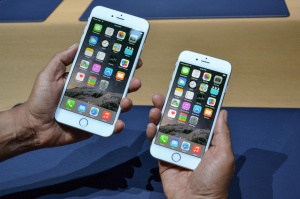
If you’re reading this blog post on a iphone or an ipad, you might like to know that between your fingers you hold a physical manifestation of inequality.

Today is Blog Action Day 2014 and bloggers from around the world have been invited to discuss inequality.

It’s a problem that’s all around us and there is a bit of complacency or even acceptance about it. We all know that there is a huge difference in the standard of living between those in different parts of the world. But with people living in grinding poverty often living so far away from us, it’s easy to feel detached. How does it involve me?

apple-iphone-6-hands-on-6-2-970x646-c

Let me return to that iphone between your hands. Yours aren’t the only hands to be placed on it. The chances are, long before your iphone was assembled, a Congolese miner working in appalling conditions mined the raw materials necessary for its construction (a UN report on mining in the Congo cited deaths from collapsed mines, child labour, and respiratory disease as features of the Coltan mining industry).

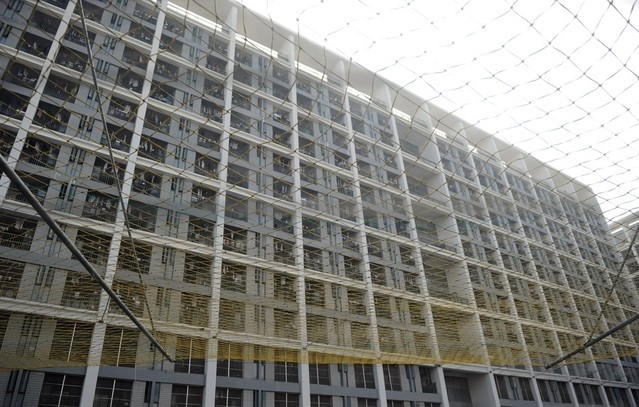
Later down the line, the iphone would have been assembled at one of Foxconn’s factories in China. The company hit the headlines in recent years due to a spate of suicides at their factories due to the miserable working conditions and low pay. The company responded by surrounding their buildings with safety nets to prevent workers jumping to their deaths.

iLgq0RPDOQXU

Their workers sometimes work 12 hours shifts, 13 days in a row. In a must watch video by SACOM (Students and Scholars against Corporate Misbehaviour), a Foxconn worker says “We wake up before the roosters, sleep after the dogs, and eat worse than the pigs”.

Inequality really isn’t so far away, is it? The hands that mined the coltan, the hands that assembled it in China, the hands that sold you the iphone at the Apple store.

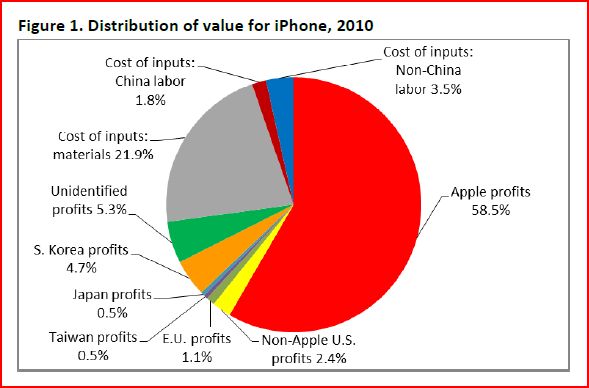
Here’s the iphone breakdown of where you money goes when you buy an iphone. Look how little of your money goes to the Chinese labour, and how much of it goes it to the bulging coffers of the Apple directors.

Inequality is alive, real and rife in today’s world. This isn’t about Apple, it’s about the global economic system we live in that not just allows this inequality, but needs it to survive.

So what can we do? Something. Whatever you do, do something. Share this information, boycott corporations that contribute to inequality, vote for parties that are interested in redressing the balance, join your local occupy movement and support international uprisings that are trying to bring about change.

Think of the hands that built your iphone and the hands that hold it now – should they really exist in such different worlds?

** This post was inspired by a talk at The Communication and Media Research Institute (CAMRI) at the University of Westminster by Dr. Jenny Chan from the University of Oxford, the former director of the NGO SACOM – Students and Scholars against Corporate Misbehaviour http://sacom.hk/ . An mp3 recording of the talk is available here.**

Posted in Uncategorized | Tagged , , , , | 2 Comments

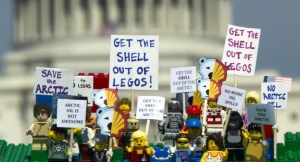
Targets – Or how Greenpeace used the public to pressure Lego to hurt Shell

 On October 9th 2014, Lego finally succumbed to pressure from Greenpeace to end its marketing contract with Oil company Shell. The straw that broke the camel’s back was this video – ‘Everything’s NOT awesome’, a Greenpeace remake of a song featured in the popular Lego Movie. The video has well over 6 million hits on YouTube. But how did this campaign achieve its goal?

Roman Krznaric’s Oxfam report “How Change Happens” (2007) offers us some useful questions for analysing a successful campaign:

• Who or what was involved in the change?

– This is an interesting case because there are four main parties involved in the campaign: Greenpeace, Lego, Shell and people (or public opinion/pressure). Greenpeace’s main gripe is with Shell, but rather than directly target Shell in this campaign, they focused on raising public pressure on Lego to cut its contract with Shell.

• What strategies were used to bring about the change?

– In this particular campaign it was essentially a very effective music video. It caused such bad publicity for Lego that ultimately the Danish company felt it had to agree not to renew its contract with Shell. The campaign also used images like these to publicise the fight:

Greenpeace Lego Shell Capitol Hill

• What were the contexts that affected how the change happened?

– The context is mainly to do with public perceptions of both brands. People have fond, nostalgic memories of Lego. They associate it with their childhoods, with their children. The 2014 Lego Movie, which has the original “Everything is Awesome” song, also plays off these positive associations. Shell, however, is an oil company. The public generally has a poor impression of oil companies as major polluters and mega rich corporations. What Greenpeace so cleverly did was to create a video that, quite literally, tars Lego with the same brush. The company realised that the public’s attention was being drawn to the relationship between the two companies, and Lego realised their positive reputation would be sullied by the association.

• What was the process or pathway of change?

– The campaign, while largely successful due to the video, draws on decades of environmental activism against oil companies. It is only possible to make Lego worry about the damage the association with Shell will do their own reputation if Shell have a bad reputation. And the fact that Shell and oil companies have a bad reputation is built upon decades of environmental activism. Indeed, the video footage itself cleverly draws upon themes and images that are already part of the canon of environmental activism. Polar bears, oil tankers, cigar smoking businessmen, ice caps, wildlife drowning in oil spills.

“What matters is not so much the stories you tell as the extent to which the stories you tell resonate with the stories your audience already knows.” (Polletta 2008)

The Greenpeace video very cleverly draws on these stories we already know to make their point. It also juxtaposes the warm, positive feelings of childhood toys we have, with the shocking, cold, adult world of business and environmental damage. The lyrics of the song, ‘Everything is Awesome’ are completely subverted when played over these images.

While that is the tool by which Greenpeace achieved their goal, we should also consider their Theory of Change. Greenpeace’s main aim here is to challenge oil companies like Shell. On this particular occasion they found a way of challenging them by targeting those associated with them. The fact that they used public opinion to do this is also significant, because in doing this campaign they raised further bad publicity for Shell, which is in keeping with their broader goals.

The fundamental battle being fought in society is the battle over the minds of the people. The way people think determines the fate of norms and values on which societies are constructed”  (Castells 2007)

Posted in Uncategorized | Tagged , , , , , , | Leave a comment

#OccupyHongKong

The 'Umbrella Revolution'

The ‘Umbrella Revolution’

Where else could this blog start but with the kind of mass protest that first ignited my passion for activism, social change, solidarity, direct action and revolution?

The images coming out from Hong Kong are very familiar. Masses occupying the centre of town, young men and women wearing medical masks to protect themselves from the tear gas standing peacefully, defiantly. And in front of them the most familiar image of all – lines of monolithic riot police, as uniform in appearance as the protesters are varied, as obedient as the demonstrators are defiant, the line between them the physical manifestation of the gap between change and the obstacles to that change.

hong-kong-protest

It’s an image that symbolises power, “the structural capacity of a social actor to impose its will over other social actors” and counter-power, “the capacity of a social actor to resist and challenge power relations that are institutionalised” (Castells 2007)

We’ve seen similar movements play out on our TV screens, on Twitter, YouTube and facebook dozens of times in the last 3 or 4 years – Tunis, Tahrir, Pearl Roundabout, Benghazi, Athens, Madrid, Taksim Square, Santiago, New York, London…

And now Hong Kong. Today protesters are standing up to demand greater democracy, to have a chance to have the full and final say over who leads them, to express themselves, to show the authorities that they will not silently accept the status quo.

In short, they want change.

This campaign is, at its core, about voices being heard. A common slogan in the Hong Protest is “one person, one vote” – a campaign to ensure that every Hong Kong citizen’s voice is heard on an equal level, without Beijing’s interference.

When viewed as a campaign for social change, this slogan is one of many tools used by the protesters to drum up supports for the movement on a local and international level. The movement has many features that has helped its popular appeal – for example the use of a famous Cantonese pop song which has now become the song of the uprising:

This makes it easier for regular citizens to feel a sense of familiarity with the movement. But other familiar icons make it easy for people around the world to identify with the Hong Kong youth.  Such as:

Mobile phones – many of us are following events on our smart phones. Seeing them hold theirs aloft shows they’re not really so different to you and I:

taiwan_small

hongkong-china

Yellow ribbons – in Hong Kong a symbol of universal sufferage and democracy, and around the world it has various symbolic connotations, often relating to struggles (in the UK a pink ribbon is worn to show support for Breast Cancer research).

fists-n-300x0

Familiar popular culture references, in this case to the John Lennon song “Imagine”:

By3PQsVIUAA1G_F

And, perhaps most importantly, the umbrella.

456248148

Hong Kong pro-democracy protesters

v2-tear-AP

The umbrella has become such an important symbol in Hong Kong that the uprising has been dubbed the Umbrella Revolution.

The umbrella – a commonly used item in Hong Kong to guard against the harsh sun – has been transformed from a prosaic, ordinary item into a revolutionary weapon and symbol. Not only is this an item which everyone across the world understands and can identify with, it’s also a symbol of the struggle between ordinary looking citizens using ordinary items, and a masked police force using dangerous or lethal weapons.

It’s been a feature of other recent struggles and reminds me of Egyptian revolutionaries who used ordinary household items, including pots and pans, to protect themselves from the police.

cairo-demonstrator

The writing on his ‘helmet’ reads: down with Mubarak

For the protesters, this allows the images to perfectly reinforce the narrative that they are delivering in interviews and on social media – that they are the people. They are the representatives of the ordinary citizen that are heroically standing in front of the authorities who are using violent foot soldiers to prevent the people from getting their rights. The activists actively shape the frame and form the narrative, they are “signifying agents” (Snow & Benford 1988) that construct meaning. An umbrella, a yellow ribbon  a kitchen pot, all are transformed by the meaning placed on them by activists.

Mass action like what’s happening in Hong Kong now is an example of when a campaign for change ignites in a significant number of people the fire of fighting for the cause. It’s that unique intersection between raised awareness, belief in a cause, empowerment, unity, and a belief that your actions can change things. In many ways, it is the turning point that most campaigns strive for, but few achieve.

So what can we learn from Hong Kong? As we’ve seen in previous uprisings, uniting behind a single specific cause, particularly an achievable one, makes it easier to get, and keep, people’s support. Contrast Hong Kongs demand for their the city’s unpopular Chief Executive to step down as leader and for free voting, and Egypt’s demand for Mubarak to step down, and Turkish protesters calling for the cancellation of an urban development plan in Gezi Park, to Occupy NY and London’s lofty but vague demands to express their discontent and change the system.

Armed with a specific, difficult but arguably achievable goal, the protesters set about campaigning. The slogans, the familiar tools, the popular music, and their media savviness all helped. But the key here is that this protest did not arrive spontaneously out of nowhere. Activists, in particular from the ‘Hong Kong Federation of Students’ and ‘Scholarism’, have for years been laying the ground work. According to Foreign Policy, as early as January 2013 the ‘Occupy Central with Love and Peace’ movement warned that it would occupy the financial district if Hong Kong was not granted universal suffrage – this campaign was a long time in the making.

Whether or not it achieves its specific goals right now, the movement has already been a success at least in terms of galvanising support and raising awareness. The media campaigns that we are seeing today coming out of Hong Kong, which has helped to gain and keep support locally and internationally, are of course important. But that alone would not have been enough. The campaign owes a lot to the hard work that has been put in for the past several years, before #HongKongProtest trended on twitter and before the eyes of the world turned towards the island.

Posted in Uncategorized | Tagged , , , , | 1 Comment